Sunday, 29 May 2022

SCOTTISH ISLAND IDYLLS

The islands of Mull and Iona  are one of my most favourite places on the earth.  So join me  on my island journey recalling  many happy visits. 
 

 I feel this could be in the Greek Islands - but no  it was on Iona, looking across to the hills of Mull on a beautiful  day in September  - not your usual  image of Scotland! 

MULL   is the second largest island in  the inner Hebrides off the west coast of Scotland and a wonderful place for an "away from it all" holiday.   The Mull song says it all:

'The Isle of Mull is of isles the fairest,
Of ocean's gems 'tis the first and rarest;
Green grassy island of sparkling fountains,
Of waving woods and high tow'ring mountains."
 

Sailing out of Oban on the mainland at the start of our journey- a 45 minute sail where you pass the Lismore Lighthouse and are surrounded by just hills and water.


Lismore Lighthouse 
 
 
 Duart Castle is  the first sight on approaching Mull  by the the Ferry  - the 13th century ancestral home of the Clan McLean guarding  the entrance to the Sound of Mull
 
Landing at Craignure, we then travelled 50 miles on a single track road to Fionnphort,  the most westerly point on the island  -  a tiny village of some 70 residents with  one pub, one   shop,  one cafe, one seafood cabin, and the ferry office, gateway to the islands of Iona and Staffa.  

The first time I had seen such a sign!  


  From Fionphort looking across to Iona
 
At Fionnphort is  the ferry to Iona.  It is is only a 10 minute crossing, but can get surprisingly choppy in poor weather.  Only Iona residents can take their car across.  Despite  the number of   tourist that visit the island, it is amazing how quickly you can get away from them and often find yourself on your own on one of the many beaches. 


There is something very special about Iona and the peace and tranquillity you can experience there.   It is only  1.5 miles wide by 3 miles long, with a population of around 120 permanent residents, but everyone talks about  the magical nature of this   seat of Scottish Christianity where St. Columba founded his Abbey in 563AD. Later it became a place of pilgrimage and learning,   and over 40 of Scotland's earliest kings were buried there. The restored medieval abbey continues to hold daily services  and 48 kings of Scotland are reputed to be buried in the grounds. 
 
Church, Coast, Iona Abbey, Iona


"Deep peace of the running waves"
(A line from John Rutter's Gaelic Blessing) 


 Iona War Memorial

From Fionnphort, one day, we took the small boat trip out to Staffa. Besides going in the cave, we also climbed the rather precarious steps up to the top of the  island, with a rope to hold on to  as a safely aid, and saw whales swimming.  


Its most famous feature is Fingal's Cave,  a large sea cave located near the southern tip of the island some 60 feet high.   The sight  of the rocks and the sound of the sea inspired composer Felix Mendellsohn to capture his visit  in 1829 in "The Hebrides Overture". Other famous visitors made the journey there  - John Keats, Sir Walter Scott, Joseph Turner and Robert Louis Stevenson.  Queen Victoria and Prince Albert were rowed into the cave on the royal barge in 1847.


 Highland Cattle freely roam the village of Fionphort
  
 
One hungry  cow decided to take a nibble from the garden of our holiday cottage, so I dashed out to take a photograph. 
 

This young cow  stood motionless at the side of the road, very happy to pose for the visitors walking down to the ferry across to Iona.
                                             
 
 Two shop signs in  Tobermory - the principal village was the setting for the children's TV series "Balamory".  It  was built as a fishing port in the late 18th century and is   noted for its brightly painted buildings along the main street to the pie
 
 
And So Farewell to Mull


Did You Know? 
  • Calgary in Canada takes its name from Calgary on Mul

 ***********
 
Copyright © 2022 · Susan Donaldson.  All Rights Reserved  

Friday, 8 April 2022

SPRINGTIME IN THE SCOTTISH BORDERS - AND BEYOND

There could be only one theme for this time of year - Spring


Craigsford Bridge, built c.1737 over the Leader Water at Earlston


EARLY SPRING
I love photographing trees in all seasons 

Above Earlston looking east to the Lammermuir Hills.


A country  lane near Dryburgh


Another lane near my home in Earlston. 


A misty day on the driveway into Floors Castle at Kelso 


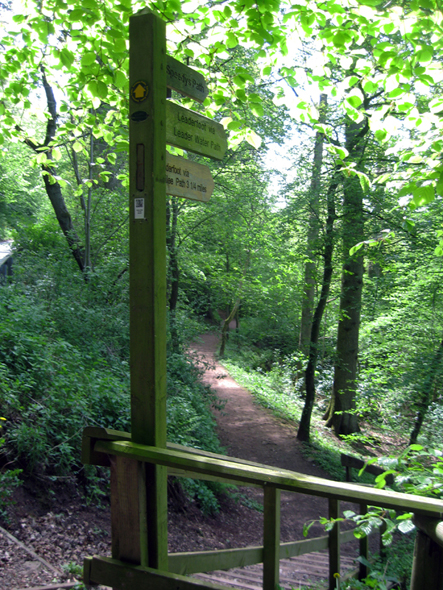
 Woodland Glade in Cowdenknowes Wood, Earlston
 
The River Teviot at Hawick 


SPRING IN BLOOM 
 

  Cowdenknowes Wood, Earlston


 Mill Bank Woods, Earlston
 

A tunnel of trees outside Earlston

 
SPRING FLOWERS IN THE GARDEN


 Irises
 

Camelia 


 Rhododendrons in Stow Churchyard
 
 
 SPRING FLOWERS IN THE WOODLANDS
 
Rhododendrons in Cowdenknowes Wood 


Primroses in Cowdenknowes Wood, Earlston

Wood Anemones in Cowdenknowes Wood, Earlston 

 
FINALLY - CLASSIC IMAGES OF SPRINGTIME 
DAFFODILS  & RABBITS 


The Temple of the Winds at Castle Howard, Yorkshire
 

At Thorp Perrow Arboretum, Yorkshire
 
 
At Thorp Perrow Arboretum, Yorkshire 

At Castle Howard, Yorkshire


******************


Friday, 18 March 2022

FAMOUS MEN & WOMEN COMMEMORATED IN STONE


Statues, monuments and plaques are a natural focus for  my camera. So take a look here at  men and women commemorated for posterity in stone.


 This statue of the DUKE OF WELLINGTON, victor against Napoleon at the Battle of Waterloo in 1815,   shows him on his favourite horse Copenhagen. The statue was erected in 1852, outside the building that houses  the National Records of  Scotland, a "must visit" destination if you are researching  Scottish family history.


WILLIAM WALLACE was the Scottish Patriot during the Wars of Independence when he  defeated an English army at the Battle of Stirling Bridge and became  Guardian of Scotland until his defeat at the Battle of Falkirk  in 1298. He was captured  In 1305, handed over to Edward I of England  who had him summarily hanged, drawn and quartered for high treason.


Wallace's  statue near Dryburgh Abbey in the Scottish Borders looks across to the distant Eildon Hills.  Commissioned by the Earl of Buchan, it was the first monument to be raised to Wallace in Scotland.  In red sandstone and 21.5 feet high, it was placed on its pedestal  in 1814.


This statue of ABRAHAM LINCOLN is  thought to be the only monument to the American Civil War outside the USA.  It   was erected in the Old Carlton Burial Ground. Edinburgh in 1898 in memory of the Scottish soldiers who fought  in the American Civil War on the side of the Union.   It features a freed slave and   one of Lincoln’s famous quotations "To preserve the jewel of liberty in the framework of freedom". A bronze shield bears the old US flag, and is wreathed in thistles to the left, and cotton to the right to signify the two countries.

Calton Cemetery  just off Princes Street,   was opened in 1718 as a non-denominational burial ground and is the resting place of prominent merchants and other notable worthies of the city.  


U.S. PRESIDENT FRANKLIN D. ROOSEVELT maternal ancestors are  remembered in this plaque at the Murray Aisle in the Old Kirkyard, Selkirk in the Scottish Borders.  Roosevelt's mother was a Murray with Border connections.  

The plaque also pays tribute to Scottish patriot William Wallace. 


SIR WALTER SCOTT (1771-1832) was born in Edinburgh, but grew up in the Scottish Borders and later made his home at Abbotsford on the banks of the River Tweed, near Melrose. He was internationally  renowned as a historical novelist, poet,  playwright and historian. The Scott Monument (below)  is a prominent feature in Princes Street Gardens,  Edinburgh and believed to be the second largest monument to a writer in the world.


WILLIAM CHAMBERS (1800-1883)  was born in Peebles in the Scottish Borders and moved to Edinburgh  in 1814 to work in the book-selling trade.  He soon branched out into publishing,  founding in 1832 with his brother Robert  the firm of W. & R. Chambers.   He was a keen advocate of popular education,  and the firm became known in particular for its dictionaries.

The business  prospered,   and William was made Lord Provost of the capital city. He was responsible for many city developments including the restoration of St. Giles Cathedral. His  statue is in in street that bears his name, by Edinburgh University and The National Museum of Scotland.  He also
gifted to his native town of Peebles  the Chambers Museum and Library. 

CATHERINE SPENCE was born in Melrose in the Scottish Borders, the fifth child of a family of eight - daughter  of lawyer David Spence, who,  faced with bankruptcy and financial ruin, emigrated with his family to Australia in 1839.  David Spence became  Adelaide's first town clerk. 
 
Catherine was the first woman in Australia to stand as a political candidate, the first woman journalist and novelist, a battler for women's  suffrage  and social reform, and a lifelong campaigner for proportional representation.  She played a a key role  in settingp a children's court system. wrote the first legal studies textbook to be published in in Australia and helped to transform South Australia into a respected, progressive colony.  She is commemorated in Adelaide by the Spence Archive of her papers and writings and by a statue.  The 5$ baknote celebrating the centenary of the federation of Australia features her image.
 

Another women pioneer in her field  MARIA SKLODOWSKA CURIE (1867-1934)

 Marie was born in Warsaw, and  left to study in Paris.  She became a co-founder of  a new branch of science - radioactivity - with her husband Pierre Curie.    She discovered two new elements - radium and polonium (named after her home country).  In 1903 she became the first woman to receive the Nobel Prize for Physics and in 1911 for chemistry.   This plaque is outside her home in Warsaw  which now features a museum on her life and achievements.


To end on a lighter note, remembering two of the world's most popular composers - first   waltz king JOHANN STRAUSS (1825-1899) who spent his summers in the spa town of Bad Ischl in Austria.


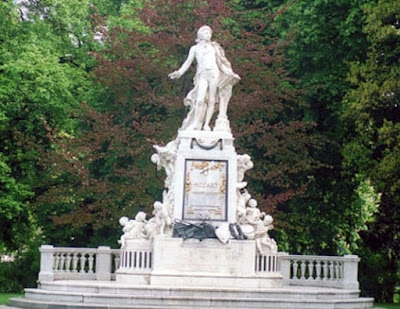
and the statue of WOLFGANG AMADEUS MOZART (1756-1791) in Vienna.


**************
 
Copyright © 2022 · Susan Donaldson.  All Rights Reserved 


BRIDGES OVER RIVERS AND CENTURIES

Here I am taking you on  a journey over bridges, spanning over two centuries  in the Scottish Borders   - from the 18th century to the pres...