Friday, 18 March 2022

FAMOUS MEN & WOMEN COMMEMORATED IN STONE


Statues, monuments and plaques are a natural focus for  my camera. So take a look here at  men and women commemorated for posterity in stone.


 This statue of the DUKE OF WELLINGTON, victor against Napoleon at the Battle of Waterloo in 1815,   shows him on his favourite horse Copenhagen. The statue was erected in 1852, outside the building that houses  the National Records of  Scotland, a "must visit" destination if you are researching  Scottish family history.


WILLIAM WALLACE was the Scottish Patriot during the Wars of Independence when he  defeated an English army at the Battle of Stirling Bridge and became  Guardian of Scotland until his defeat at the Battle of Falkirk  in 1298. He was captured  In 1305, handed over to Edward I of England  who had him summarily hanged, drawn and quartered for high treason.


Wallace's  statue near Dryburgh Abbey in the Scottish Borders looks across to the distant Eildon Hills.  Commissioned by the Earl of Buchan, it was the first monument to be raised to Wallace in Scotland.  In red sandstone and 21.5 feet high, it was placed on its pedestal  in 1814.


This statue of ABRAHAM LINCOLN is  thought to be the only monument to the American Civil War outside the USA.  It   was erected in the Old Carlton Burial Ground. Edinburgh in 1898 in memory of the Scottish soldiers who fought  in the American Civil War on the side of the Union.   It features a freed slave and   one of Lincoln’s famous quotations "To preserve the jewel of liberty in the framework of freedom". A bronze shield bears the old US flag, and is wreathed in thistles to the left, and cotton to the right to signify the two countries.

Calton Cemetery  just off Princes Street,   was opened in 1718 as a non-denominational burial ground and is the resting place of prominent merchants and other notable worthies of the city.  


U.S. PRESIDENT FRANKLIN D. ROOSEVELT maternal ancestors are  remembered in this plaque at the Murray Aisle in the Old Kirkyard, Selkirk in the Scottish Borders.  Roosevelt's mother was a Murray with Border connections.  

The plaque also pays tribute to Scottish patriot William Wallace. 


SIR WALTER SCOTT (1771-1832) was born in Edinburgh, but grew up in the Scottish Borders and later made his home at Abbotsford on the banks of the River Tweed, near Melrose. He was internationally  renowned as a historical novelist, poet,  playwright and historian. The Scott Monument (below)  is a prominent feature in Princes Street Gardens,  Edinburgh and believed to be the second largest monument to a writer in the world.


WILLIAM CHAMBERS (1800-1883)  was born in Peebles in the Scottish Borders and moved to Edinburgh  in 1814 to work in the book-selling trade.  He soon branched out into publishing,  founding in 1832 with his brother Robert  the firm of W. & R. Chambers.   He was a keen advocate of popular education,  and the firm became known in particular for its dictionaries.

The business  prospered,   and William was made Lord Provost of the capital city. He was responsible for many city developments including the restoration of St. Giles Cathedral. His  statue is in in street that bears his name, by Edinburgh University and The National Museum of Scotland.  He also
gifted to his native town of Peebles  the Chambers Museum and Library. 

CATHERINE SPENCE was born in Melrose in the Scottish Borders, the fifth child of a family of eight - daughter  of lawyer David Spence, who,  faced with bankruptcy and financial ruin, emigrated with his family to Australia in 1839.  David Spence became  Adelaide's first town clerk. 
 
Catherine was the first woman in Australia to stand as a political candidate, the first woman journalist and novelist, a battler for women's  suffrage  and social reform, and a lifelong campaigner for proportional representation.  She played a a key role  in settingp a children's court system. wrote the first legal studies textbook to be published in in Australia and helped to transform South Australia into a respected, progressive colony.  She is commemorated in Adelaide by the Spence Archive of her papers and writings and by a statue.  The 5$ baknote celebrating the centenary of the federation of Australia features her image.
 

Another women pioneer in her field  MARIA SKLODOWSKA CURIE (1867-1934)

 Marie was born in Warsaw, and  left to study in Paris.  She became a co-founder of  a new branch of science - radioactivity - with her husband Pierre Curie.    She discovered two new elements - radium and polonium (named after her home country).  In 1903 she became the first woman to receive the Nobel Prize for Physics and in 1911 for chemistry.   This plaque is outside her home in Warsaw  which now features a museum on her life and achievements.


To end on a lighter note, remembering two of the world's most popular composers - first   waltz king JOHANN STRAUSS (1825-1899) who spent his summers in the spa town of Bad Ischl in Austria.


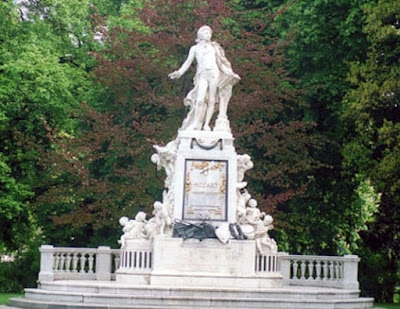
and the statue of WOLFGANG AMADEUS MOZART (1756-1791) in Vienna.


**************
 
Copyright © 2022 · Susan Donaldson.  All Rights Reserved 


Saturday, 5 February 2022

COWS ON PARADE

 February is a bit of a dismal month here, with storms, high winds, icy rain, if not snow. So I thought I would present a post on a lighter note with a parade of Cows in Scotland, and further afield.  

"I'm Showing Off my Horns"


 "I'm Hungry"

 
We were staying in a self catering cottage at Fionnphort on the far west  of the Isle of Mull, just across from Iona, and the highland cattle roamed freely  around the small village - one shop, one pub, one seafood cabin and the ferry office.  Here one hungry cow decided to take a nibble from the garden of our cottage, so I dashed out to take a photograph.


"I've walked far enough - I'm having a rest."


I'm Little and Lonely!"


This young cow stood motionless at the side of the road, very happy to pose for the visitors walking down to the ferry across to Iona.

And if you don't come across the  real thing, look out for a shop sign. 


 ******************

Cows on the Alpine Meadows in the Austrian Tyrol  - Looking So Gentle


****************

CowParade is the largest and most successful public art event in the world.  staged in 80+ worldwide since 1999.  The painted cows are displayed in  city centres  to attract tourists and shoppers.  We came across them when on a short break in Warsaw and Prague. 


To end on a colourful note to brighten these grey days: 

T.

 ***************


Copyright © 2022 · Susan Donaldson.  All Rights Reserved

Friday, 7 January 2022

SEE AMID THE WINTER SNOW - BEAUTY - FUN - FRUSTRATION

Certain years go down in recollections as particularity bad winters.  1947 was legendary in the UK coming amidst  postwar austerity.  I remember my mother saying how worried she had been at keeping my baby brother warm, in a house where the only heating was a coal fire in the living room. Onto 1963 another bad year, when my father,  returning from a business trip to  London,  was stuck overnight on a train in the Border hills - and no means in those day, pre mobile phones,  to let us know why he had not come home that evening. 

Here I feature family photographs mainly from 2001, 2011 and 2018, all taken in the Scottish Borders where I live - along with some occasional snowy quotes.

BEAUTY IN SNOW

 A country road out of Earlston - this same view was the lead view in my recent Autumn post.  


 The Leader Water at Earlston


Trees on the A68  - the main road from Edinburgh through Earlston 


The snow capped Black Hill at Earlston
 
On a winter's walk on the hills around Lauder 
 
A lonesome sheep on the Border hills.
  
 
FUN IN SNOW 

"Jan-u-ary brings the snow; Makes our feet and fingers glow" (Sara Coleridge)

Granddaughter exploring this new world of snow for the first time, 2010


"When it snows, you have two choices - shovel or make snow angels" (Unknown) 


 Somebody' s idea of fun!  Playing at snow angels, 2018.


FRUSTRATION IN SNOW

2011 was a blip in all the talk of global warming, when we had some of  the worst snow for years, and Hawick where we then lived  was cut off for three days.  I could not get to work, with no buses running outside the town.  I

 We lived at the top of a hill, and no way was I venturing downhill to the shops. People, were were being resourceful going down to the supermarket  with  backpacks and toboggans to bring goods home.

 Our house on the right


 "Winter, winter, cold and ice! A mug of hot chocolate would be nice" 

 (Nicolette Lennert)


 The joys of having a dog in winter weather - though not too sure about the owners 

The postman  in Earlston trudging along in the snow


.I have now reached the stage of rather favouring winter hibernation! to escape snows, unlike this heron - a familiar site on the River Slitrig in Hawick. 


Snow when it first falls can be a wonderful magical experience transforming the landscape. But when it changes to an icy, slippery danger, I prefer not to venture outside, and when it ends up as grey, messy, slush on pavements, it is a depressing, wet task trying to negotiate pavements and cross roads.

So let's end on a positive note with more of my favourite snow pictures.


"Earth stood hard as iron, water like a stone" (Christina Rossetti) 


 The frozen River Teviot at Hawick  


 Cowdenknowes Wood, Earlston


12th century Melrose Abbey, five miles from my home. 2018


*******************

Copyright © 2022 · Susan Donaldson.  All Rights Reserved


Saturday, 11 December 2021

CHRISTMAS GREETINGS FROM SCOTLAND

Community spirit is strong in my village of Earlston, (population around 1800), and  the Earlston Lights Group   does a sterling job in bringing a glow into our lives at Christmas time.


Santa Claus leads the procession for the switching on of the lights and then tours the village raising money for local charities.  


*********


Below the decorations in Princes Street Gardens some years ago


 ********
 
 AND FINALLY - A HAPPY & HEALTHY CHRISTMAS TO AL MY READERS 


          **********************


Wednesday, 1 December 2021

STAGECOACHES- ROMANCE V. REALITY

When we look at the pictures of stagecoaches on Christmas cards,   they look colourful, dashing and rather romantic, but what was the reality like for our ancestors traveling over 170 years ago?


 One of the many beautiful wall paintings you see on the outside of buildings in Austria.

Stagecoaches were public service vehicles designed specifically for passengers and running to a published schedule.  Eight passengers could be packed (squashed)  inside, with others sitting at the back of the coach and the poorest passengers atop along with the luggage. A newspaper report  of 1846 refers to a heavy coach of 18 to 20 passengers.  

ADVERTISEMENT   -Caledonian Mercury (Edinburgh) :  29th September 1843


NEW COACH EDINBURGH TO JEDBURGH VIA EARLSTON  
Calling at Pathhead, Carfrae Mill, Lauder, Earlston, Leaderfoot
 To Jedburgh in Five Hours
Fares to Jedburgh only 5 shillings outside;  6 shillings inside
 
Note:5 shillings is equivalent to  approx. £15 today.   The 5 hour journey  between Edinburgh and Jedburgh in the Scottish Borders covered 50 miles over what was a hilly road - as children we called it "the switchback road".
 
 A pub sign taken in Greenwich.  London. 
 
 
Contemporary newspaper reports of the time present a graphic picture of the perils facing passengers and  (and pedestrian) alike. 
 
 
"The Border Watch" - 19 November 1846: 

A SLOW COACH. – The Edinburgh and Hawick coach, which left Princes Street, Edinburgh on Saturday afternoon at 4pm  did not reach the Bridge Inn, Galashiels, until about 10pm; thus accomplishing the distance of thirty-two miles in the astonishing period of six hours!   
 
 "The Kelso Chronicle" - 16 June 1837: 
"ACCIDENT. – On Tuesday evening  the reins broke, and the driver left his seat, and went along the pole to recover them. His foot slipped, and he fell between the pole and the horses to the ground. Fortunately, the wheels passed on both sides of him, and he escaped with no other injury than a slight blow to the head.The horses set off at rapid pace, and ran through Tweedmouth. The passengers kept their seats, and the horses while running furiously along the bridge, were stopped by a young man named Robert Robertson, who, with great personal risk, seized the horses’ head."
"The Kelso Chronicle" -  4 October 1844:
“WONDERFUL ESCAPE. – As the Defiance Coach was leaving the town on Friday last, a girl, about 10 years of age, who was hastily crossing the High Street, and not perceiving the coach, ran in betwixt the fore and hind horses, by which she was struck down, when the horses and coach went over her, to the horror of the spectators, who could do nothing to save her. The wheels on the one side passed over one of her legs, bruising it most severely in two places, while the opposite wheels went over the top of her bonnet, close to the head, but without doing any injury. The poor girl’s thigh was also much bruised, apparently by one of the horses’ feet. We are glad to state that she is recovering from the effects of her injuries.”

  We were on holiday in Warsaw, when this stagecoach drove into the square. But we never managed to find out what it was all about.   


The development of the railways,  meant that by the mid 19th century,  the era of  stagecoach travel was coming to an end 
 
 
But the iconic image of the stagecoach as a mode of travel 
still captures our imagination. especially at Christmas time.  


  **************** 

BRIDGES OVER RIVERS AND CENTURIES

Here I am taking you on  a journey over bridges, spanning over two centuries  in the Scottish Borders   - from the 18th century to the pres...